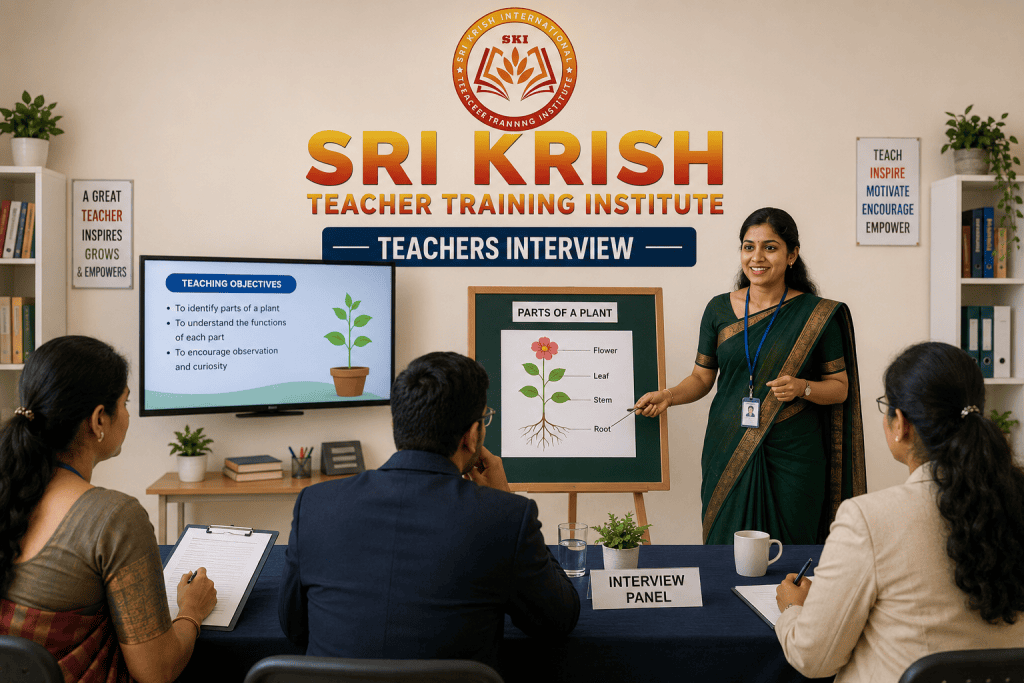
Top 10 Teaching Skills Schools Look for During Teacher Interviews in 2026: A Complete Guide for Future Educators
Are You Ready for Your Dream Teaching Job?
A teaching interview is no longer just about answering questions or presenting your qualifications. Schools today are searching for educators who can inspire, engage, innovate, and adapt to the evolving world of education.
Imagine two candidates applying for the same teaching position. Both hold similar qualifications and have completed teacher training. Both appear confident and enthusiastic.
Yet, one candidate receives the appointment letter while the other does not.
What made the difference?
The answer lies in the skills schools truly value.
Modern schools are looking beyond academic degrees. They want teachers who can manage classrooms effectively, build meaningful relationships with students, integrate technology, use modern teaching methodologies, assess learning creatively, and continuously grow as professionals.
Whether you’re an aspiring Montessori teacher, preschool educator, primary school teacher, or secondary educator, understanding these expectations will help you stand out during interviews and build a successful teaching career.
At Sri Krish Teacher Training Institute, we prepare future educators with practical knowledge, child-centred teaching strategies, classroom confidence, and industry-relevant skills that today’s schools actively seek.
Let’s explore the Top 10 Teaching Skills Schools Look for During Teacher Interviews in 2026.
-
Classroom Management: Creating a Positive Learning Environment
One of the first qualities interview panels evaluate is your ability to manage a classroom confidently.

Classroom management is much more than maintaining discipline. It is about creating a safe, respectful, engaging, and productive environment where every child can learn without fear.
Schools look for teachers who can:
- Establish classroom routines
- Maintain discipline positively
- Encourage student participation
- Handle behavioural challenges calmly
- Promote mutual respect
- Create inclusive classrooms
Interview Tip
Instead of simply saying,
“I can manage a classroom.”
Explain how you would:
- Set classroom expectations
- Use positive reinforcement
- Handle disruptions respectfully
- Encourage active participation
Practical answers always leave a stronger impression.
-
Excellent Communication Skills
Teaching is built on communication.
Schools carefully observe how candidates communicate from the moment they enter the interview room.
They assess:
- Clarity of speech
- Confidence
- Listening skills
- Body language
- Eye contact
- Professionalism
An effective teacher communicates clearly with:
- Students
- Parents
- Colleagues
- School management
The ability to simplify complex ideas into understandable concepts is one of the strongest qualities of an outstanding educator.
-
Child-Centred Teaching Approach
Today’s classrooms focus on learning rather than simply teaching.
Schools want teachers who understand that every child learns differently.
Instead of asking,
“Did I finish the lesson?”
Effective teachers ask,
“Did my students understand the lesson?”
Child-centred teachers:
- Encourage exploration
- Promote discussion
- Support creativity
- Build confidence
- Respect individual learning differences
- Focus on holistic development
This approach creates independent learners rather than passive listeners.
-
Knowledge of Modern Teaching Methodologies
Schools increasingly expect teachers to use innovative teaching strategies that actively engage students.
Interviewers often ask,
“How would you teach this topic?”
They are evaluating your teaching methodology, not just your content knowledge.
Some of the most valued teaching methodologies include:
Activity-Based Learning (ABL)
Students learn by doing through hands-on activities, experiments, games, and projects.
Example:
Children learn fractions by cutting a pizza model instead of memorising definitions.
Experiential Learning
Students learn through real-life experiences, reflection, and application.
Examples include:
- Science experiments
- Educational field visits
- Role play
- Classroom simulations
- Practical demonstrations
Inquiry-Based Learning
Teachers encourage students to ask questions, investigate, and discover answers independently.
Instead of giving information directly, students become active thinkers.
Project-Based Learning (PBL)
Students work collaboratively on meaningful projects that solve real-world problems while developing research, communication, creativity, and teamwork.
Collaborative Learning
Children learn through group discussions, peer teaching, brainstorming, and teamwork.
Teachers become facilitators rather than lecturers.
Differentiated Instruction
Every classroom includes students with different abilities and learning styles.
Effective teachers modify lessons according to students’ needs rather than expecting every child to learn in the same way.
Montessori & Child-Centred Education
Especially in preschool and primary education, schools highly value teachers who understand:
- Hands-on learning
- Freedom within limits
- Observation-based teaching
- Individual learning pace
- Self-directed learning
- Prepared learning environments
-
Technology Integration in the Classroom
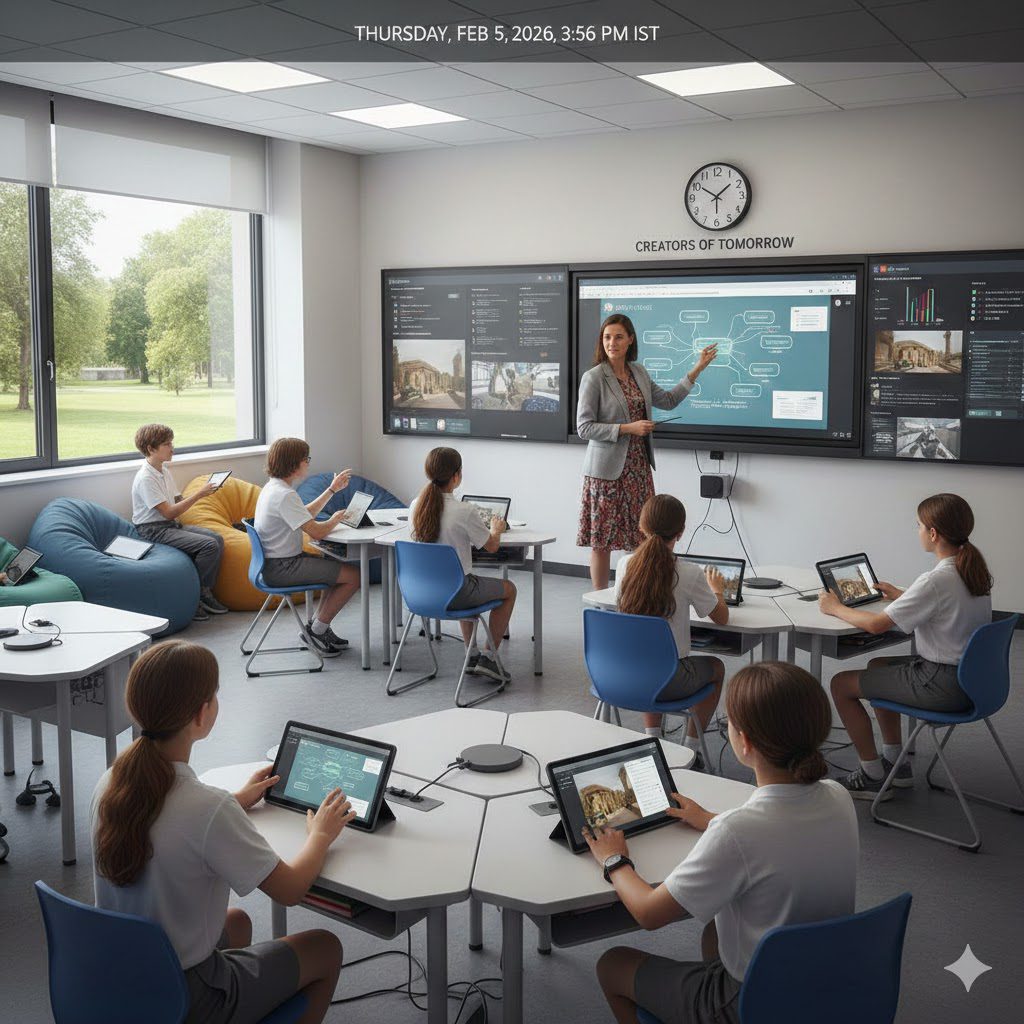
Technology is transforming education, and schools today expect teachers to confidently integrate digital tools into classroom learning. Technology should not replace effective teaching—it should enhance student engagement, collaboration, creativity, and personalized learning.
According to Google for Education, digital technologies can help create more engaging, inclusive, and collaborative classrooms by enabling teachers to personalize instruction, encourage student participation, and develop essential 21st-century skills. When used purposefully, technology empowers both teachers and students to achieve better learning outcomes.
Learn more: https://edu.google.com/
Schools appreciate teachers who know how to use:
Digital Presentation Tools
- Microsoft PowerPoint
- Canva
- Google Slides
Learning Management Systems (LMS)
- Google Classroom
- Microsoft Teams
- Moodle
Smart Classroom Tools
- Interactive smart boards
- Digital whiteboards
- Document cameras
- Educational apps
Online Assessment Platforms
- Kahoot!
- Quizizz
- Google Forms
- Microsoft Forms
Teachers who are digitally confident adapt more quickly to changing educational environments.
-
AI Literacy: The Future Teacher’s Greatest Advantage
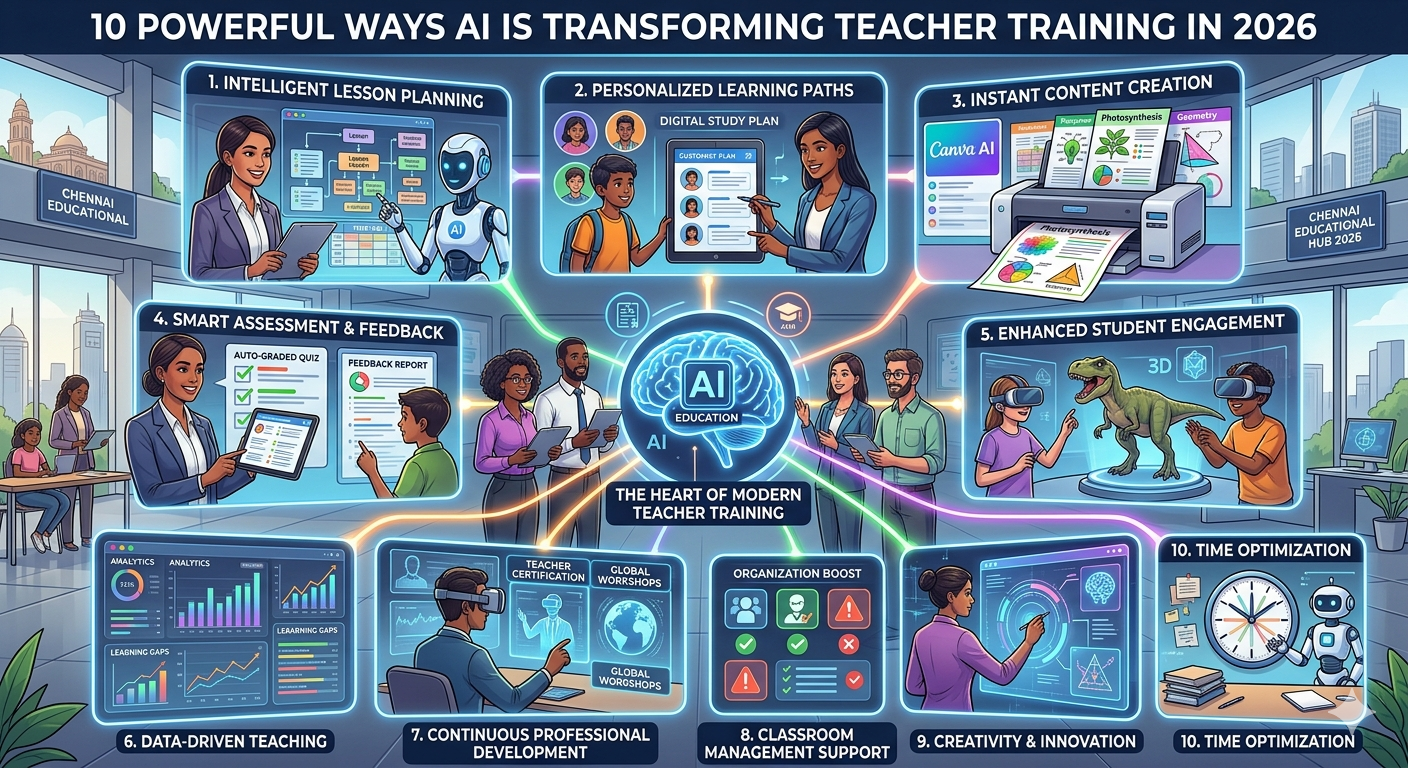
Artificial Intelligence is changing how teachers plan lessons, create assessments, and personalise learning.
Schools increasingly value educators who understand how to use AI responsibly and ethically.
Teachers can use AI for:
- Lesson planning
- Creating worksheets
- Generating quizzes
- Preparing rubrics
- Differentiating learning materials
- Brainstorming classroom activities
- Simplifying complex concepts
AI does not replace teachers.
It empowers teachers to spend more time engaging with students and less time on repetitive administrative tasks.
Teachers who embrace AI demonstrate adaptability and future-readiness.
-
Assessment and Feedback Skills
Teaching is not complete without assessment.
Schools expect teachers to evaluate student learning effectively while providing constructive feedback.
Strong educators use:
- Formative assessments
- Summative assessments
- Diagnostic assessments
- Observation checklists
- Exit tickets
- Peer assessment
- Self-assessment
- Rubrics
- Performance-based evaluation
Feedback should be:
- Timely
- Specific
- Encouraging
- Action-oriented
Meaningful feedback motivates students to improve continuously.
-
Emotional Intelligence and Child Psychology
Students remember how teachers made them feel long after they forget a lesson.
Schools increasingly value teachers who understand children’s emotions, behaviour, and developmental needs.
Emotionally intelligent teachers:
- Build trust
- Encourage shy learners
- Handle conflicts calmly
- Recognise emotional needs
- Create psychologically safe classrooms
- Develop positive teacher-student relationships
A teacher who understands child psychology creates classrooms where students feel confident to learn and grow.
-
Creativity and Innovation
Children learn best when lessons are memorable.
Schools seek teachers who can transform ordinary lessons into exciting learning experiences.
Creative teachers use:
- Storytelling
- Educational games
- Role play
- Art integration
- STEM activities
- Hands-on learning
- Visual aids
- Real-life examples
Creativity helps students develop curiosity, critical thinking, and problem-solving skills.
-
Professionalism and Continuous Learning
Professionalism often becomes the deciding factor during interviews.
Schools appreciate teachers who:
- Arrive prepared
- Dress professionally
- Respect school policies
- Collaborate with colleagues
- Communicate respectfully
- Accept constructive feedback
- Continue learning throughout their careers
The best educators never stop learning.
They regularly update themselves with new teaching strategies, educational technologies, curriculum changes, and child development research.
What Schools Really Want
The modern teacher is expected to combine knowledge, compassion, creativity, technology, and professionalism.
Schools want educators who can:
- Inspire curiosity
- Foster independent thinking
- Build positive classroom relationships
- Integrate technology meaningfully
- Use AI responsibly
- Apply modern teaching methodologies
- Support diverse learners
- Assess learning effectively
- Encourage collaboration
- Adapt to educational change
These qualities distinguish exceptional teachers from average candidates.
How Sri Krish Teacher Training Institute Prepares Future Educators
At Sri Krish Teacher Training Institute, we believe great teachers are developed through knowledge, practice, reflection, and continuous improvement.
Our teacher training programmes are designed to equip aspiring educators with:
- Classroom management skills
- Modern teaching methodologies
- Montessori education techniques
- Child psychology
- Phonics instruction
- Activity-based learning
- Technology integration
- AI awareness for educators
- Lesson planning
- Assessment strategies
- Practical teaching experience
- Interview preparation
- Communication and leadership skills
Our mission is to prepare confident, compassionate, and future-ready educators who are equipped to succeed in modern classrooms.
Final Thoughts
Teaching is no longer just about delivering lessons—it is about shaping future generations.
Schools are looking for educators who can create engaging classrooms, understand children’s unique learning needs, embrace educational technology, apply innovative teaching methodologies, and continue growing throughout their careers.
If you aspire to become a teacher who inspires, leads, and makes a lasting impact, start by developing these essential skills.
At Sri Krish Teacher Training Institute, https://srikrishteachertraininginstitute.com/ we are committed to preparing educators who are ready not only to succeed in interviews but also to transform classrooms and positively influence the lives of countless learners.
The future belongs to teachers who are willing to learn, adapt, and inspire.
Frequently Asked Questions (FAQ)
What are the most important teaching skills schools look for during interviews?
Schools look for classroom management, communication skills, child-centred teaching, modern teaching methodologies, technology integration, AI literacy, assessment skills, emotional intelligence, creativity, and professionalism.
How can I prepare for a teaching interview?
Gain practical teaching experience, practise lesson demonstrations, improve communication skills, stay updated with educational technology, and understand child psychology and modern teaching methodologies.
Why are teaching methodologies important?
Teaching methodologies such as Activity-Based Learning, Project-Based Learning, Inquiry-Based Learning, Experiential Learning, and Montessori education improve student engagement, understanding, and long-term learning outcomes.
Why should teachers learn AI and educational technology?
AI and digital tools help teachers create engaging lessons, personalise learning, automate routine tasks, and improve classroom efficiency while enhancing student learning experiences.
Why choose Sri Krish Teacher Training Institute?
Sri Krish Teacher Training Institute prepares aspiring educators through practical training, Montessori education, child-centred teaching, technology integration, AI awareness, interview preparation, and real classroom experience, ensuring graduates are ready for the demands of modern schools.